Table of Contents
You signed up for Volcano Engine, found the ARK platform console, grabbed your API key, and fired off a curl request. You expected a video. You got a SignatureDoesNotMatch error. Then you fixed the signing — and got a task ID back with no video, no status, and no idea whether your 30-second 4K generation was running, queued, or silently failed.
That sequence — signing failure, async confusion, then polling uncertainty — is what nearly every developer hits in their first hour with the Seedance 2.5 API. I spent three afternoons testing every authentication method, every region, and every generation mode across two SDK languages to build a workflow that skips the guesswork entirely.
By the end of this guide, you will have a working Python and JavaScript pipeline for text-to-video and image-to-video generation with Seedance 2.5 — including correct async polling, cost estimation, and the five most common setup failures and how to fix them.
Seedance 2.5 is ByteDance's latest AI video generation model, announced at the Volcano Engine FORCE Conference on June 23, 2026. It generates native 30-second 4K single-segment video — no stitching — with up to 50 multimodal reference inputs, 3D white-box pre-visualization, frame-level local editing, and unified audio-video generation with lip-sync across 10+ languages. The API is available through the Volcano Engine ARK (方舟) platform, ByteDance's unified model-serving infrastructure. If you want the full feature breakdown, read our Seedance 2.5 pricing and capability comparison.
This guide covers the hosted API only. Self-hosting the open-weight model is a different deployment pattern not covered here.
What You Are Actually Calling: ARK Platform Architecture
Before writing any code, you need a clear mental model of what sits between your HTTP request and the GPU cluster running the model. The Seedance 2.5 API is not a standalone endpoint — it is a model deployed on the Volcano Engine ARK platform, which layers authentication, rate limiting, queueing, and billing on top of the raw inference.
Here is the request lifecycle:
- Your client signs the request with HMAC-SHA256 using your AK/SK pair
- The ARK gateway validates the signature at
ark.cn-beijing.volces.com - The gateway routes your request to an inference endpoint for model
doubao-seedance-2-5-XXXX - ARK's scheduler queues the job and assigns it to an available GPU worker
- The model runs inference — a 30-second 4K clip at 24 FPS means generating 720 frames coherently across a Sparse DiT denoising path
- The output video is uploaded to Volcengine TOS (object storage) and a signed download URL is returned
- The task status transitions through
PENDING→RUNNING→SUCCEEDEDorFAILED
Rule of Thumb: If you are writing synchronous HTTP calls expecting an immediate video response, stop. The async pattern is non-negotiable — every Seedance 2.5 generation mode uses it. A single 30-second 4K generation can take 5–15 minutes of GPU time.
This is fundamentally different from calling a text model where you get tokens back in milliseconds. You submit, you poll, you download. There is no "quick generation" shortcut.
Account Setup: The Three Decisions That Determine Whether Your First Call Works
Before generating a single video, you must make three decisions correctly. Getting any one wrong produces errors that are misleading and frustrating.
1. Choose Your Region
Seedance 2.5 is deployed regionally. The two primary regions for API access are:
| Region | Console URL | API Endpoint |
|---|---|---|
| Beijing (cn-beijing) | console.volcengine.com | ark.cn-beijing.volces.com |
| Singapore (ap-southeast-1) | console.volcengine.com | ark.ap-southeast-1.volces.com |
Beijing is the default. Singapore offers lower latency for APAC users outside mainland China but has a narrower model selection — verify Seedance 2.5 availability before committing.
2. Create Your AK/SK Pair
Volcano Engine uses Access Key (AK) and Secret Access Key (SK) authentication. This is analogous to AWS IAM credentials.
Navigate to the Volcano Engine IAM console and create a new key pair. Store the SK immediately — the console shows it only once.
Rule of Thumb: Create a dedicated IAM sub-user with minimal ARK permissions for API access. Never use your root account AK/SK in application code. If credentials leak, you can revoke the sub-user's keys without affecting your entire Volcano Engine account.
3. Enable the ARK Service and Fund Your Account
Go to the ARK console and enable the service. ARK uses a prepaid billing model — you must add funds before making API calls. The minimum top-up is typically ¥100 RMB (~$14 USD).
Verify billing is active by attempting a small generation job from the ARK playground:
https://ark.volcengine.com/region:cn-beijing/experienceSelect doubao-seedance-2-5 from the video generation model list, provide a simple prompt like "a cat walking on a beach," and confirm the generation completes. If the playground works, your account is correctly provisioned.
Authentication: The AK/SK Signing Mechanism
ARK does not use a simple Bearer token. Every request must be signed with HMAC-SHA256 using your SK. This is the step where most developers trip first.
How the Signature Works
The signing process follows the Volcengine API Signature V4 specification:
- Build a canonical request string from HTTP method, URI, query parameters, headers, and body
- Create a string-to-sign from the canonical request plus timestamp, region, and service name
- Compute the HMAC-SHA256 signature using your SK as the key
- Add the signature to the
Authorizationheader
Here is the raw algorithm:
Signature = HMAC-SHA256(
  HMAC-SHA256(
    HMAC-SHA256(
      HMAC-SHA256("VOLC-SHA256-CREDENTIAL" + SK, Date),
      Region
    ),
    Service
  ),
  "volc_request"
)
Writing this by hand is error-prone. Use the Volcengine SDK, which handles signing automatically.
Method 1: Direct SDK Configuration (Recommended)
Python:
from volcenginesdkarkruntime import Ark

client = Ark(
    ak="your-access-key-id",
    sk="your-secret-access-key",
    region="cn-beijing"  # or "ap-southeast-1"
)
JavaScript/Node.js:
// Install: npm install @volcengine/openapi
const { Ark } = require('@volcengine/openapi');

const client = new Ark({
  accessKeyId: 'your-access-key-id',
  secretAccessKey: 'your-secret-access-key',
  region: 'cn-beijing'
});
Method 2: Environment Variables
For production deployments, use environment variables to avoid hardcoding credentials:
export VOLC_ACCESSKEY="your-access-key-id"
export VOLC_SECRETKEY="your-secret-access-key"
The SDK picks these up automatically when you instantiate the client with no explicit credentials:
from volcenginesdkarkruntime import Ark

# SDK reads from VOLC_ACCESSKEY and VOLC_SECRETKEY env vars
client = Ark(region="cn-beijing")
Method 3: Config File
For local development, create ~/.volc/config:
{
  "ak": "your-access-key-id",
  "sk": "your-secret-access-key"
}
The Fastest Way to Verify Authentication
Run this 30-second test before writing any generation code. It confirms your AK/SK pair works and the region is correct:
from volcenginesdkarkruntime import Ark

client = Ark(
    ak="your-access-key-id",
    sk="your-secret-access-key",
    region="cn-beijing"
)

# List available models to verify auth
try:
    models = client.models.list()
    video_models = [m for m in models if "seedance" in m.id.lower()]
    for m in video_models:
        print(f"Model available: {m.id}")
except Exception as e:
    print(f"Auth failed: {e}")
If you see a SignatureDoesNotMatch error, your AK or SK is wrong. If you see InvalidAccessKeyId, the AK does not exist or has been revoked. If the call succeeds but returns no Seedance models, the model is not deployed in your region.
Text-to-Video: Your First Seedance 2.5 Generation
Seedance 2.5 supports multiple generation modes: text-to-video (T2V), image-to-video (I2V), video-to-video (V2V), and multi-reference generation. Start with T2V — it is the simplest path and validates your entire pipeline.
The Async Pattern Explained
Every generation follows this exact sequence:
SUBMIT → Receive task_id → POLL for status → DOWNLOAD result URLDo not skip the polling step. Do not assume one sleep-and-check is enough. A 5-second 1080p clip typically takes 1–3 minutes to generate. A 30-second 4K clip with audio can take 8–15 minutes.
Python: End-to-End T2V Pipeline
import time
import requests
from volcenginesdkarkruntime import Ark

client = Ark(
    ak="your-access-key-id",
    sk="your-secret-access-key",
    region="cn-beijing"
)

# Step 1: Submit the generation task
response = client.images.generate(
    model="doubao-seedance-2-5",
    prompt="A cinematic drone shot flying over a misty mountain lake at sunrise, 4K, smooth camera movement, photorealistic",
    size="1920x1080",           # 1080p; use "3840x2160" for 4K
    duration=10,                # seconds; max 30
    fps=24,
    num_inference_steps=50,     # 25-50 range; higher = more quality, more cost
    seed=None,                  # set a fixed seed for reproducibility
    negative_prompt="blurry, low quality, distorted faces, watermark"
)

task_id = response.id
print(f"Task submitted: {task_id}")

# Step 2: Poll for completion
def poll_task(task_id, timeout_minutes=20):
    start = time.time()
    while time.time() - start < timeout_minutes * 60:
        status = client.images.retrieve(task_id)
        if status.state == "SUCCEEDED":
            return status
        elif status.state == "FAILED":
            raise Exception(f"Generation failed: {status.error}")
        elif status.state == "CANCELLED":
            raise Exception("Task was cancelled")

        elapsed = int(time.time() - start)
        print(f"Status: {status.state} | Elapsed: {elapsed}s")
        time.sleep(10)  # Poll every 10 seconds

    raise TimeoutError(f"Task {task_id} did not complete within {timeout_minutes} minutes")

result = poll_task(task_id)

# Step 3: Download the video
video_url = result.data[0].url  # The signed download URL
video_data = requests.get(video_url).content

output_path = f"output/seedance_{task_id}.mp4"
with open(output_path, "wb") as f:
    f.write(video_data)

print(f"Video saved to: {output_path}")
print(f"Duration: {result.data[0].duration}s")
print(f"Resolution: {result.data[0].size}")
JavaScript/Node.js: End-to-End T2V Pipeline
const { Ark } = require('@volcengine/openapi');
const fs = require('fs');
const https = require('https');

const client = new Ark({
  accessKeyId: 'your-access-key-id',
  secretAccessKey: 'your-secret-access-key',
  region: 'cn-beijing'
});

async function generateVideo(prompt, options = {}) {
  const config = {
    model: 'doubao-seedance-2-5',
    prompt: prompt,
    size: options.size || '1920x1080',
    duration: options.duration || 10,
    fps: options.fps || 24,
    num_inference_steps: options.steps || 50,
    negative_prompt: options.negativePrompt || 'blurry, low quality, distorted faces, watermark',
    ...options
  };

  // Step 1: Submit
  const response = await client.images.generate(config);
  const taskId = response.id;
  console.log(`Task submitted: ${taskId}`);

  // Step 2: Poll
  const result = await pollTask(taskId);

  // Step 3: Download
  return downloadVideo(result.data[0].url, taskId);
}

async function pollTask(taskId, timeoutMinutes = 20) {
  const start = Date.now();
  const deadline = start + timeoutMinutes * 60 * 1000;

  while (Date.now() < deadline) {
    const status = await client.images.retrieve(taskId);

    if (status.state === 'SUCCEEDED') return status;
    if (status.state === 'FAILED') throw new Error(`Generation failed: ${status.error}`);
    if (status.state === 'CANCELLED') throw new Error('Task was cancelled');

    const elapsed = Math.floor((Date.now() - start) / 1000);
    console.log(`Status: ${status.state} | Elapsed: ${elapsed}s`);

    await new Promise(resolve => setTimeout(resolve, 10000));
  }

  throw new Error(`Task ${taskId} timed out after ${timeoutMinutes} minutes`);
}

function downloadVideo(url, taskId) {
  return new Promise((resolve, reject) => {
    const outputPath = `output/seedance_${taskId}.mp4`;
    const file = fs.createWriteStream(outputPath);

    https.get(url, (response) => {
      response.pipe(file);
      file.on('finish', () => {
        file.close();
        console.log(`Video saved to: ${outputPath}`);
        resolve(outputPath);
      });
    }).on('error', reject);
  });
}

// Usage
generateVideo(
  'A cinematic drone shot flying over a misty mountain lake at sunrise, 4K, smooth camera movement, photorealistic',
  { duration: 10, size: '1920x1080' }
);
With your text-to-video pipeline verified, you have the foundation. But the real leverage of the Seedance 2.5 API is in its multimodal generation modes — and choosing the wrong one is the most expensive mistake you can make.
Choosing the Right Generation Mode
Seedance 2.5 offers four generation modes. Using the wrong one wastes credits.
| If you need to... | Use this mode | Why not the other |
|---|---|---|
| Generate a video from text only | Text-to-Video (T2V) | I2V requires an input image — more setup, no benefit if you have no source image |
| Animate a static image | Image-to-Video (I2V) | T2V cannot guarantee any output matches your image |
| Remix or stylize an existing video | Video-to-Video (V2V) | T2V starts from nothing; I2V animates from a still frame |
| Control camera movement with 3D references | Multi-Reference Generation | Standard T2V and I2V ignore 3D blockout guides |
Image-to-Video with a Reference Image
response = client.images.generate(
    model="doubao-seedance-2-5",
    prompt="A person walking through this city street at night, neon lights reflecting on wet pavement",
    image="https://your-cdn.com/reference_scene.jpg",  # Reference image URL
    # Alternatively, pass base64-encoded image bytes:
    # image=open("reference_scene.jpg", "rb"),
    size="1920x1080",
    duration=8,
    fps=24,
    num_inference_steps=50
)
Video-to-Video for Style Transfer and Remixing
response = client.images.generate(
    model="doubao-seedance-2-5",
    prompt="Re-style this footage as Studio Ghibli animation, soft watercolor backgrounds, gentle character movement",
    video="https://your-cdn.com/input_clip.mp4",  # Input video URL
    strength=0.65,  # 0-1; higher = more stylization, less preservation of original
    size="1920x1080",
    duration=None,  # Inherits duration from input video
    fps=24,
    num_inference_steps=50
)
Multi-Reference Generation with 3D Blockout
This mode accepts up to 50 multimodal references — images, video clips, audio files, text, and 3D white models from Blender or Maya:
response = client.images.generate(
    model="doubao-seedance-2-5",
    prompt="A character walking through this environment, camera follows the predefined path",
    references=[
        {"type": "image", "url": "https://cdn/character_ref.png"},
        {"type": "image", "url": "https://cdn/environment_ref.png"},
        {"type": "video", "url": "https://cdn/motion_ref.mp4"},
        {"type": "audio", "url": "https://cdn/ambient_audio.wav"},
        {"type": "model_3d", "url": "https://cdn/camera_blockout.glb"}  # GLB/GLTF format
    ],
    size="3840x2160",  # 4K
    duration=30,
    fps=24,
    num_inference_steps=50,
    generate_audio=True,       # Unified audio-video generation
    lip_sync_language="en"     # 10+ languages supported
)
The 3D blockout workflow is one of Seedance 2.5's most distinctive features. Export a blockout model from Blender, upload it as a reference, and the model follows the camera path and scene composition from your 3D guide — something no other video generation API (Wan 2.7, Sora 2, Veo 3.1) currently supports.
Pricing: What a Generation Actually Costs
Seedance 2.5 API pricing is per-second of generated video, with costs scaling by resolution, duration, reference inputs, and whether audio is generated.
Official Volcano Engine ARK Pricing
ByteDance has not published official Seedance 2.5 pricing as of July 2026. Based on Seedance 2.0 pricing patterns and the model's higher compute requirements, estimates place API costs at ¥1.5–3.0 RMB per second ($0.21–0.42/sec):
| Generation Spec | Duration | Est. Low | Est. High |
|---|---|---|---|
| 5s 1080p T2V | 5 seconds | ¥7.50 ($1.05) | ¥15.00 ($2.10) |
| 10s 1080p T2V | 10 seconds | ¥15.00 ($2.10) | ¥30.00 ($4.20) |
| 15s 4K T2V | 15 seconds | ¥22.50 ($3.15) | ¥45.00 ($6.30) |
| 30s 4K with audio | 30 seconds | ¥45.00 ($6.30) | ¥90.00 ($12.60) |
| 30s 4K with 10 refs + audio | 30 seconds | ¥60.00 ($8.40) | ¥120.00 ($16.80) |
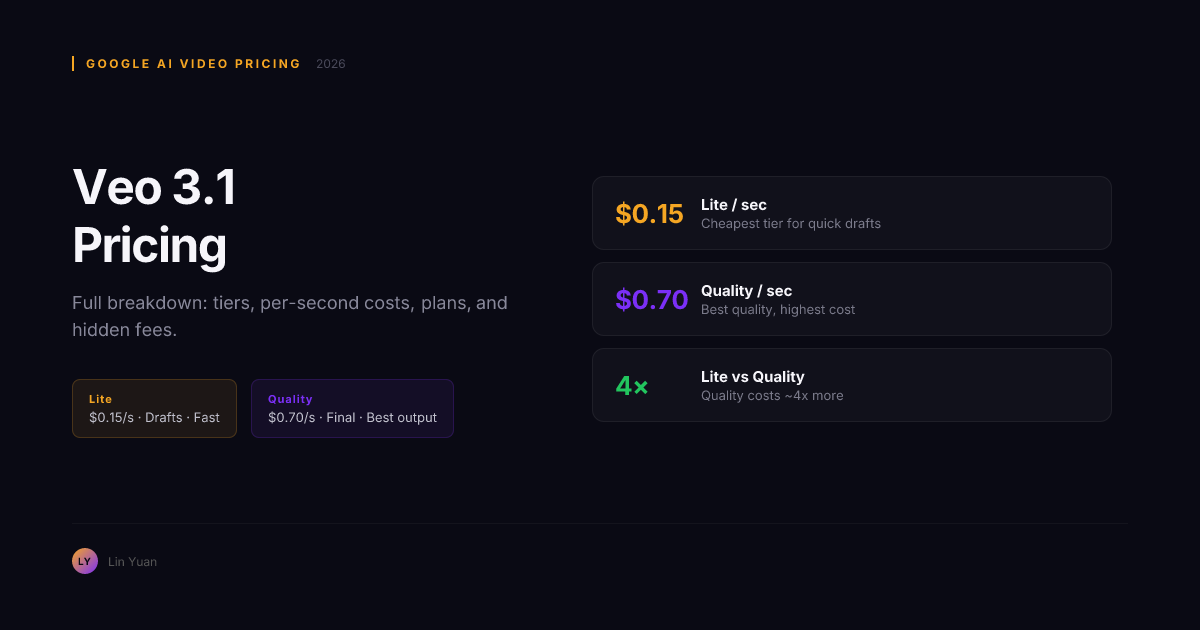
For comprehensive pricing analysis including third-party reseller comparisons and competitor benchmarks (Sora 2 at $20/month, Veo 3.1 at $19.99/month), see our Seedance 2.5 pricing guide.
Estimating Cost Before Generation
Request a cost estimate before running an expensive generation:
# Request an estimate
estimate = client.images.create_estimate(
    model="doubao-seedance-2-5",
    prompt="A cinematic drone shot over a misty mountain lake at sunrise",
    size="3840x2160",
    duration=30,
    fps=24,
    num_inference_steps=50,
    generate_audio=True
)

print(f"Estimated cost: ¥{estimate.cost} RMB (~${estimate.cost * 0.14:.2f} USD)")
print(f"Estimated time: {estimate.estimated_seconds}s")
Cost-Saving Strategies
- Start low, iterate up. Generate a 3-second, 720p, 25-step clip first to validate your prompt. Once the composition looks right, bump to your target resolution and duration.
- Use the negative prompt aggressively. A good negative prompt prevents wasted re-generations from artifacts you could have excluded up front.
- Fix seeds for comparison runs. When A/B testing prompts, fix the seed so the only variable is the prompt — otherwise you pay twice for the same test.
- Turn off audio if you do not need it. Unified audio-video generation adds cost. If you are adding audio in post, skip it.
- Shorten inference steps for drafts. Use 25 steps for draft iterations, 50 only for final renders.
Rate Limits and Quotas
ARK applies rate limits at the account level. Default limits are conservative for new accounts and increase with usage history and account standing.
| Limit Type | Default (New Account) | After 30 Days Active Use |
|---|---|---|
| Concurrent generations | 2 | 5–10 |
| Requests per minute | 10 | 30–60 |
| Total daily generations | 50 | 200–500 |
| Max single-generation duration | 30 seconds | 30 seconds |
| Max resolution | 4K (3840x2160) | 4K (3840x2160) |
Enterprise accounts with committed spend can negotiate higher limits through the Volcano Engine enterprise sales team.
Handling Rate Limit Errors
When you hit a rate limit, the API returns HTTP 429. Implement exponential backoff:
import time

def submit_with_retry(client, max_retries=5, **generation_params):
    for attempt in range(max_retries):
        try:
            return client.images.generate(**generation_params)
        except RateLimitError as e:
            if attempt == max_retries - 1:
                raise
            wait = 2 ** attempt  # 1s, 2s, 4s, 8s, 16s
            print(f"Rate limited. Retrying in {wait}s... (attempt {attempt + 1}/{max_retries})")
            time.sleep(wait)
        except Exception as e:
            # Non-rate-limit errors should not be retried
            raise
You have authentication, submission, polling, mode selection, and cost estimation working. The next set of problems occurs when something breaks and the error message alone does not point to the fix. These five failures repeat across every Seedance 2.5 integration I have seen, and each has a resolution path that is shorter than the debugging cycle most developers run through on their own.
Common Errors and How to Fix Them
SignatureDoesNotMatch
Symptom: The ARK gateway rejects your request before it reaches the model.
Root Cause: Your AK/SK pair is incorrect, or the request URI/headers/body were modified after signing.
Fix:
- Regenerate your AK/SK pair from the IAM console
- Verify no trailing whitespace in your environment variables
- Ensure you are using the correct region — a Beijing key does not work for Singapore endpoints
- If using a custom HTTP client, make sure it does not modify headers (some proxies add or reorder headers)
InvalidAccessKeyId
Symptom: The AK does not exist or has been deleted.
Fix: Check the IAM console. If the key has been rotated, update your application to use the new AK/SK pair.
InsufficientBalance
Symptom: Your ARK account balance is zero or below the minimum required.
Fix: Top up your account in the Volcano Engine billing console. The minimum top-up is typically ¥100 RMB.
Task Timeout (Generation Takes Forever)
Symptom: Your polling code runs for 20+ minutes and times out.
Root Cause: The task is stuck in the queue (high platform load), the model is processing an unusually complex generation (30s 4K with 50 references), or the task silently failed without updating status.
Fix:
- Check the ARK console for the task status — the dashboard sometimes shows more detail than the API
- If stuck in
PENDINGfor more than 10 minutes, the queue is overloaded. Try again during off-peak hours (Beijing time 10 PM–6 AM) - Reduce complexity: fewer references, shorter duration, lower resolution
- Cancel the stuck task and resubmit
InvalidPrompt or Content Moderation Rejection
Symptom: The task immediately transitions to FAILED with a content moderation error.
Root Cause: Seedance 2.5 applies ByteDance's content safety filters.
Fix: Remove references to violence, explicit content, public figures, or sensitive topics from your prompt. Content moderation is strict and applied at the platform level — there is no bypass.
Expert Pitfall: The content moderation filter is not a pre-inference gate — it is applied during inference, meaning the model still consumes GPU time and you still incur cost before the rejection fires. On some platforms, credits are not refunded for moderation rejections. Test moderation sensitivity with a 3-second 720p generation before committing to a 30-second 4K render on any prompt with borderline content.
Seedance 2.5 API vs. Other Video Generation APIs
How does the Seedance 2.5 API compare to alternatives for programmatic access?
| Capability | Seedance 2.5 API | Wan 2.7 API | Sora 2 API | Veo 3.1 API |
|---|---|---|---|---|
| Max native duration | 30 seconds | 5 seconds | ~20 seconds | ~20 seconds |
| Max resolution | 4K | 720p (hosted) / 1080p (open) | 1080p | 1080p |
| Reference inputs | Up to 50 (multimodal) | 1–2 (image/video) | Limited image | Limited image |
| 3D pre-viz | Yes (Blender/Maya) | No | No | No |
| Native audio gen | Yes (lip-sync 10+ lang) | No | No | No |
| Frame-level editing | Yes | No | No | No |
| Async pattern | Submit → Poll → Download | Submit → Poll → Download | Submit → Poll → Download | Submit → Poll → Download |
| Auth method | AK/SK HMAC-SHA256 | API Key (Bearer) | API Key (Bearer) | OAuth 2.0 / API Key |
| Pricing model | Per second of video | Per call / tokens | Per generation (bundled) | Per generation (bundled) |
| SDK languages | Python, Java, Go, Node.js | Python, Node.js | Python, Node.js | Python, Node.js, Java |
Seedance 2.5 dominates on raw capability — but its AK/SK authentication and China-based infrastructure (Beijing data center) introduce compliance and latency considerations for non-APAC users. For developers integrating across regions, the Wan 2.7 API (which we cover in our Wan 2.7 API guide) offers simpler Bearer-token auth and multi-region deployment. Choose Seedance 2.5 when output quality and duration are the priority; choose Wan 2.7 when deployment flexibility matters more.
Production Checklist
Before deploying Seedance 2.5 API calls in a production service:
- Use environment variables for credentials. Never commit AK/SK to source control.
- Implement robust polling with exponential backoff. Production queues can have variable wait times.
- Set a hard timeout. A hung generation that you poll forever burns your polling budget and blocks your pipeline.
- Cache successful results. Re-generating the same prompt is wasteful if you need the output again.
- Log task IDs and costs. Track every generation with its
task_idand estimated cost for billing reconciliation. - Handle the download URL expiry. Signed URLs typically expire within 24 hours. Download and persist videos immediately.
- Monitor your ARK billing dashboard. Video generation costs add up fast — a single 30-second 4K generation with audio can cost $8–16.
- Test content moderation handling. Have a fallback for moderation rejections so a single flagged prompt does not take down your pipeline.
- Use a dedicated IAM sub-user with minimal permissions. Limit the key to ARK inference access only — no admin, no billing, no data management.
- Set up billing alerts. Configure Volcano Engine budget alerts at ¥500, ¥1000, and ¥5000 thresholds.
Responsible Usage: Compliance, IP, and Cost Guardrails
Seedance 2.5's capabilities come with legal and operational obligations that go beyond API integration.
Data Residency and Compliance
Volcano Engine's Beijing and Singapore regions mean your video data, reference inputs, and generation metadata are processed and stored in China or Singapore respectively. For applications handling PII, protected health data, or content subject to GDPR, this requires explicit disclosure and consent. If your use case requires data processing within the EU or US only, the Seedance 2.5 hosted API is currently not a compliant option — consider self-hosting the open-weight model instead.
Content Safety and Platform Moderation
ByteDance's content safety filters are applied at the inference layer and cannot be bypassed. This is not a feature toggle — it is a platform-level enforcement. Prompts that reference violence, explicit content, hate speech, or politically sensitive material will be rejected before output delivery. Design your application's prompt pipeline to validate inputs before submission, not after rejection.
Cost Discipline
A single 30-second 4K generation with unified audio can cost $8–16. At 5–10 test iterations before a final render, a single polished clip can run $50–100. Implement hard cost controls in your integration:
- Set a per-session budget cap at the application level, not just the billing dashboard.
- Log every generation's
task_id, estimated cost, and actual cost for reconciliation. - Use the cost estimate endpoint before every generation, not just before expensive ones.
- Configure budget alerts at ¥100, ¥500, and ¥2000 thresholds — and act on them, do not just acknowledge the notification.
API Key Security
AK/SK pairs grant programmatic access to your Volcano Engine billing account. A leaked key with ARK inference permissions can run thousands of dollars in generations before you notice. Rotate keys on a schedule, restrict IAM sub-user permissions to the minimum required scope (ARK inference only, no admin, no billing, no IAM), and never commit credentials to source control.
Core Summary
The Seedance 2.5 API is the most capable video generation API available to developers in July 2026, but it is also the most demanding to integrate correctly. The async pattern, AK/SK signing, and per-second pricing model are not optional — they are architectural decisions baked into the platform.
Here is the workflow that works:
- Set up: Create a dedicated IAM sub-user, generate AK/SK, and fund your ARK account
- Verify: Call
models.list()to confirm authentication before any generation - Submit: Send a generation request with your model, prompt, resolution, and duration
- Poll: Check task status every 10 seconds with a hard timeout at 20 minutes
- Download: Save the signed URL immediately — it expires within 24 hours
- Estimate first: Use the cost estimate endpoint before expensive 4K audio generations
The model that makes Seedance 2.5 unique — native 30-second 4K with unified audio, 50 multimodal references, and 3D pre-visualization — also makes it the most compute-intensive video API on the market. Respect the cost, plan your polling, and your integration will work.
Next: Read our Seedance 2.5 pricing comparison to understand how API costs stack up against Sora 2 and Veo 3.1, or see the Wan 2.7 API guide for an alternative with simpler authentication and multi-region deployment.