Table of Contents

Is MiniMax H3 on Hugging Face? A Complete 2026 Guide to Weights, Access, and Open Alternatives
You've just watched a MiniMax H3 demo clip and now you want to run the model yourself. You type "minimax h3 hugging face" into Google, open Hugging Face, and start scrolling. Ten minutes later you're deep in a list of community Spaces, demos, and repositories that look almost right — but none of them is the actual H3 generation model. You're not the first person to hit this wall, and you won't be the last.
Here's the thing: that wall isn't a mistake in your search. It's a business decision by MiniMax, and it changes everything about how you should plan your video-generation workflow.
A quick note on credibility before we go further: the details below about what MiniMax publishes on Hugging Face and how its API access works are compiled from vendor documentation and community reports as of September 2026. MiniMax ships updates fast, and Hugging Face pages change constantly, so treat specifics as point-in-time — and verify them yourself before building anything on top (I'll show you a 2-minute way to do that at the end).
By the end of this guide you'll know exactly what is and isn't on Hugging Face, how to actually use MiniMax H3, and which open-weights models (like the Wan 2.x line) are the real "download it yourself" alternatives. Plus one decision rule that stops you from re-choosing every time a new model drops.
The Straight Answer: MiniMax H3 Weights Are Not on Hugging Face
No — MiniMax H3 is a closed, proprietary model. Its generation weights are not published on Hugging Face, and there is no official "minimax h3 download" link anywhere.
What does exist is a MiniMax/Hailuo presence on Hugging Face: organization pages, demo Spaces, and some research checkpoints from earlier Hailuo-line models (as reported). Those are real, but they are not the H3 generation model. If someone offers you "MiniMax H3 weights," treat it as unofficial until proven otherwise.
That single fact explains 90% of the confusion around this search term. The rest of this article unpacks what that means in practice.
What Hugging Face Actually Hosts: The Three Layers You're Mixing Up
This is the core breakdown that saves you hours of dead-end browsing. When people say "a model is on Hugging Face," they can mean three very different things — and only one of them is what you're hoping for when you search "minimax h3 hugging face."
Layer 1 — Weights (the model files). These are the actual neural network parameters, usually .safetensors files. If you have the weights, you can download, self-host, fine-tune, and modify the model on your own hardware. This is what MiniMax does not publish for H3. Open models like the Wan 2.x line publish exactly this.
Layer 2 — Spaces and demos. A hosted web UI someone built around a model. You can try it, but you can't download the underlying engine. A demo is a storefront, not the product.
Layer 3 — Research checkpoints and partial releases. Smaller components or older-generation models released for research purposes. MiniMax has released some of these from earlier Hailuo-line models (as reported), but they are not current-generation, and they are not H3.
Here's the mental model that makes this click: an API product like MiniMax H3 is like a restaurant — you can taste the food, but you don't get the recipe. An open-weights release is like a published cookbook — you get the recipe and can cook it anywhere, change the ingredients, and sell what you make. When you search "minimax h3 weights," you're asking for the cookbook, and it doesn't exist.
What You CAN Find: Real MiniMax Content on Hugging Face (and How to Spot Fakes)
You're not hallucinating the results — there is real MiniMax-related content on Hugging Face. Here's what's actually there, per vendor pages and community reports as of September 2026:
- A MiniMax/Hailuo organization page. MiniMax maintains a Hugging Face presence used for demos, integrations, and research announcements. It's worth following if you want release news, but it's not a weights warehouse for H3.
- Demo Spaces. You'll find Spaces showcasing MiniMax capabilities — speech, character interaction, and video demos — many built by third-party developers using the API rather than hosted weights.
- Earlier Hailuo-line research checkpoints. MiniMax has published select research checkpoints from earlier Hailuo generations (as reported). These are interesting for researchers but won't give you H3-quality video.
- Community fine-tunes of older generations. You may find community repositories fine-tuning older Hailuo-line checkpoints. Quality varies wildly; verify before relying.
- Third-party integrations and wrappers. GitHub-style helper repos, API wrappers, and pipelines that call MiniMax's API from Python. Useful, but they're just glue code — the model still runs on MiniMax's servers.
Rule of Thumb: if a Hugging Face repo claims to contain MiniMax H3 weights, it's almost certainly unofficial, renamed, or fake. Verify before you waste VRAM on it.
How to Actually Access MiniMax H3: The 2 Official Routes (As Reported)
Since you can't download it, you rent it. As of September 2026, the two official routes are:
1. The Hailuo AI platform. MiniMax's consumer/creator-facing platform, where H3 is available through a web interface for text-to-video and image-to-video generation. This is the fastest way to test H3's quality today — no code, no setup. (Vendor-reported; availability varies by region.)
2. The MiniMax API. For developers who want H3 inside their own apps, MiniMax offers a paid API with per-generation or token-based pricing. You send a prompt, get a video back. You never see the weights.
Both routes share the same trade-off: you get the newest, most polished model, but you pay per generation, you depend on MiniMax's servers, and you can't modify the model itself.
Why Closed Models Aren't on Hugging Face: The Business Logic
This section explains the why — and once you see it, you'll stop being surprised by it.
For MiniMax, the weights ARE the product. H3 is the result of expensive training runs (compute, data, research salaries — typically in the tens of millions of dollars for frontier video models). Publishing the weights would mean:
- Competitors fork it for free. Anyone could fine-tune and relaunch a near-clone.
- The API revenue model collapses. Why pay per generation if you can self-host?
- The competitive moat evaporates. MiniMax keeps H3's edge proprietary precisely because it's their core revenue asset.
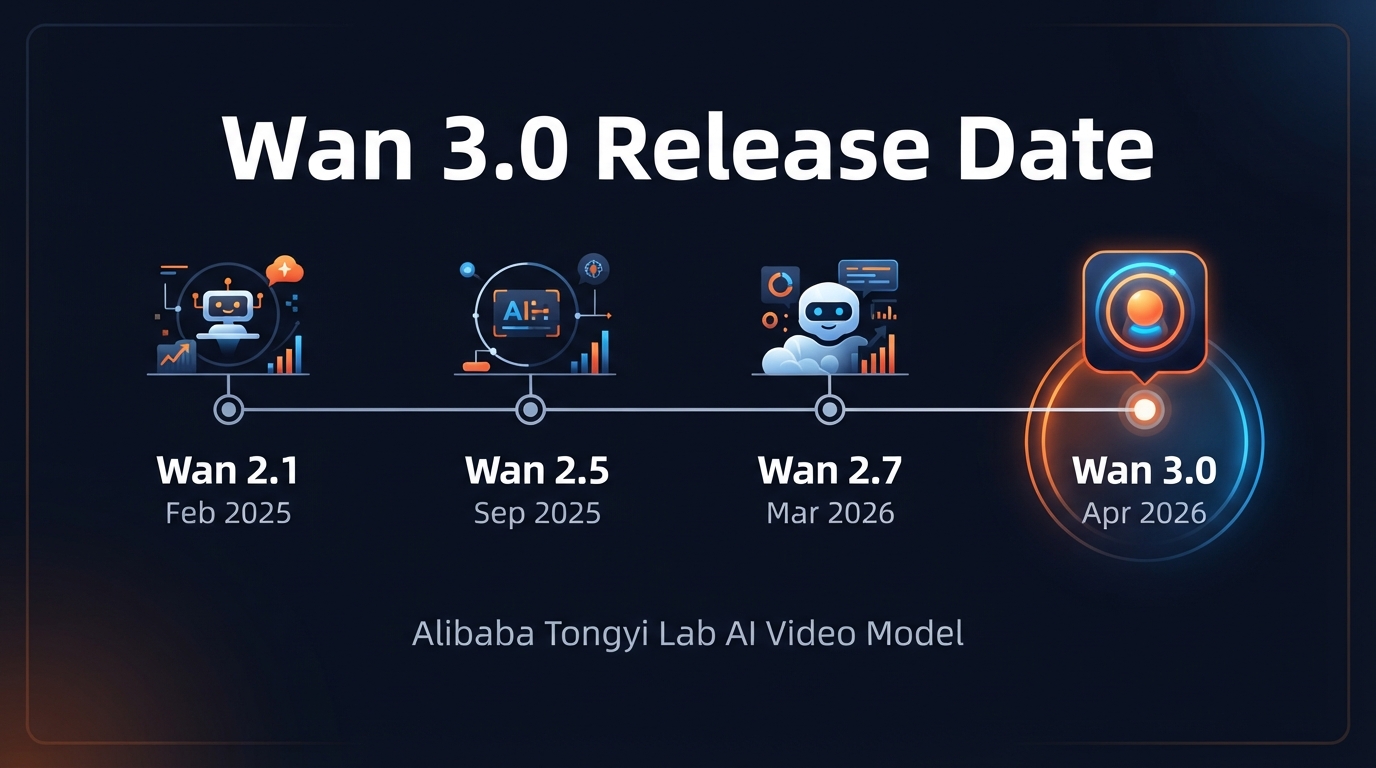
By contrast, the Wan 2.x line (released with Apache 2.0 licenses, starting with Wan 2.1 in January 2025) follows the opposite playbook: publish open weights to grow an ecosystem, monetize through cloud hosting, enterprise support, and API services instead. Both are rational businesses — they just monetize differently. That single fork explains nearly every "but why isn't it on Hugging Face?" question that follows.
Self-Host vs. Hosted: What Being "on Hugging Face" Actually Buys You
People conflate "is it on Hugging Face" with "can I use it," so let's split them cleanly:
| What you get | Open weights (e.g., Wan 2.x) | API-only (e.g., MiniMax H3) |
|---|---|---|
| Download model files | Yes (ModelScope + Hugging Face) | No |
| Run on your own GPU | Yes | No |
| Fine-tune / modify | Yes (Apache 2.0) | No |
| Cost model | Hardware + electricity (one-time-ish) | Per generation / subscription |
| Hardware needed | ~24 GB+ VRAM consumer GPUs (varies by model) | None (cloud) |
| You control the model | Fully | Not at all |
| Model updates | You update manually | Automatic, newest version |
The technical depth moment here: when you run Wan 2.x locally, you're executing the diffusion transformer's forward pass yourself — the checkpoint files are loaded into your VRAM, and every generation happens on your hardware. When you use the MiniMax API, you're sending a prompt to a black box; you never see the computation. That's the entire difference, and it explains why API access can't replace weights for anyone who needs self-hosting or fine-tuning.
The Open Alternative: What You Can Actually Download (Wan 2.x and Beyond)
If your goal is "run a top-tier video model on my own machine," the Wan 2.x line is the standard answer — it's the open alternative people mean when they ask for an open source alternative to MiniMax H3.
| Model | Released | License | Availability | Notes (as reported) |
|---|---|---|---|---|
| Wan 2.1 | Jan 2025 | Apache 2.0 | ModelScope + Hugging Face | The line's open-weights foundation |
| Wan 2.2 | 2025 | Apache 2.0 lineage | ModelScope + Hugging Face | Successor improvements |
| Wan 2.5 | 2025 | Apache 2.0 lineage | ModelScope + Hugging Face | Continued quality gains |
| Wan 2.7 | 2026 | Apache 2.0 lineage | ModelScope + Hugging Face | Current flagship of the line |
| LTX-Video (LTXV) | 2024–25 | Open (community) | Hugging Face | Lighter/faster, smaller quality ceiling |
| MiniMax H3 | 2025–26 | Closed | Hailuo platform + API only | No weights, no self-host |
Two things to note: the Wan 2.x line is primarily distributed via ModelScope (Alibaba's model hub), with official mirrors on Hugging Face — so searching "wan 2.x hugging face" will get you there. And with Apache 2.0 licensing across the line, Wan 2.x is genuinely open: you can self-host, fine-tune, and even use it commercially.
Decision Framework: When to Use MiniMax H3 vs. Open Weights
Stop choosing blind. Ask three questions, in order:
1. Do you need to fine-tune or self-host? Yes → open weights (Wan 2.x). There's no version of this conversation where H3 wins, because H3 weights don't exist.
2. Is your budget per-generation or fixed? Per-generation pricing that scales with usage → H3 API is fine. Fixed hardware budget, heavy volume, or unpredictable scale → self-hosted Wan 2.x gets cheaper as volume grows.
3. Do you need the absolute newest quality, or do you need control? Latest-and-greatest, zero setup, iterate fast → MiniMax H3 via Hailuo or API. Control, privacy, customization, offline use → Wan 2.x.
Rule of Thumb: if you need to own the model — download, modify, or host it — pick Wan 2.x. If you need to use the model with zero setup and you're okay renting it, pick MiniMax H3. There is no middle path for H3.
Quick scenario mapping:
- Creator testing AI video ideas → Hailuo platform, today. Nothing to install, instant results.
- Developer building a production app → compare API costs vs. self-hosting; if volume is high or data can't leave your servers, Wan 2.x self-hosted.
- Researcher / fine-tuner / student → Wan 2.x. This is the only option that lets you open the hood.
- Enterprise needing data sovereignty → Wan 2.x on your own infrastructure, full stop.
Low-Friction Verification: 2 Minutes Before You Commit to Anything
Don't trust this article, and don't trust any random repo either. Verify in 2 minutes:
Step 1 — Check the MiniMax/Hailuo Hugging Face org directly. Open Hugging Face, search the org page, and look at what it actually publishes. If H3 weights were ever released, this is where they'd appear. Today, you'll find demos and earlier-line research artifacts — not H3. (Re-check periodically; things can change.)
Step 2 — Test the open-weights path with Wan 2.x before you commit. Go to Hugging Face or ModelScope, pull a Wan 2.x checkpoint, and run one short test generation on your hardware. If your GPU handles it within your time budget, you have a real self-hosting option. If it chokes, you just saved yourself an expensive hardware purchase — and the API route is your answer.
This two-step check converts guesswork into a decision you can act on in an afternoon.
FAQ: MiniMax H3 Hugging Face Questions, Answered Straight
Is MiniMax H3 on Hugging Face? No. MiniMax H3 is a closed model; its weights are not on Hugging Face. MiniMax/Hailuo has an org page with demos and some earlier-line research artifacts, but not H3 weights.
Can I download MiniMax H3 weights? No, not officially. There is no legitimate minimax h3 download. Any repo claiming to host them is unofficial.
Does MiniMax have a Hugging Face page? Yes — MiniMax/Hailuo maintains a Hugging Face organization presence (as reported). But it contains demos, integrations, and earlier Hailuo-line research checkpoints, not current-generation weights.
How do I use MiniMax H3 without the API? You can use it through the Hailuo AI platform's web interface, which requires no code. But "without the API" still means MiniMax's servers — there's no local version.
What open video models are on Hugging Face? The strongest open-weights line is Wan 2.x (Wan 2.1, 2.2, 2.5, 2.7) with Apache 2.0 licensing, available on ModelScope and Hugging Face. Others include LTX-Video (LTXV) and various community releases.
Is Wan 2.x on Hugging Face? Yes. Wan 2.x weights are primarily on ModelScope with official Hugging Face mirrors. Wan 2.1 (January 2025) started the line under Apache 2.0.
Can I self-host MiniMax H3? No. MiniMax H3 is API/platform-only. For self-hosting, the Wan 2.x line is the direct open alternative.
Guardrails: Verify Before You Download
You now know what's real and what isn't. Before you click any download button, three rules will keep you out of trouble — each takes under a minute and saves you from the two classic failures: wasted VRAM and legal trouble.
Skip Any "Leaked" MiniMax H3 Weights
Pirated or mislabeled weights are a legal minefield, often contain malware, and are usually just renamed older models. If it's not from the official MiniMax/Hailuo org, skip it.
Action: Check the uploader and the model card before any download. Official = MiniMax org or a clearly documented community mirror of an official release.
Read the License — Every Time
Apache 2.0 (Wan 2.x) is permissive, but not everything on Hugging Face is. Some community fine-tunes carry non-commercial or restrictive terms that will bite you if your project goes commercial.
Action: Look at the license tag before downloading, and check it again before shipping anything that makes money.
Verify Checkpoints, Not Just Names
A repo called "MiniMax-H3-official" from a 3-day-old account is not official. Check account age, downloads, and community feedback.
Action: If a checkpoint has zero stars, a fresh account, and a name that sounds too good to be true, it is too good to be true.
The Bottom Line: Rent the Newest Model, or Own an Open One
Here's the whole article in one breath: MiniMax H3 is a closed model — you can rent it through Hailuo or the MiniMax API, but you will never find legitimate H3 weights on Hugging Face, because for MiniMax the weights are the product. What Hugging Face does offer is the open-weights path: the Wan 2.x line, Apache 2.0 from Wan 2.1 onward, fully downloadable and self-hostable.
So your real decision was never "how do I download H3." It's this: rent the newest closed model, or own an open one. If you need control, privacy, fine-tuning, or fixed-cost scale, grab a Wan 2.x checkpoint from ModelScope or Hugging Face and start generating. If you want zero-setup access to MiniMax's latest, sign up for Hailuo or the API and pay per generation.
And remember the Rule of Thumb one more time: need to own it — Wan 2.x. Need to use it without setup — MiniMax H3. There's no third door.
Ready to put this to work? Check our Wan 2.x pricing guide to see what self-hosting actually costs, or open the Wan generator and run one short test generation right now. For more guides like this, browse the wan27.org blog.