
Table of Contents

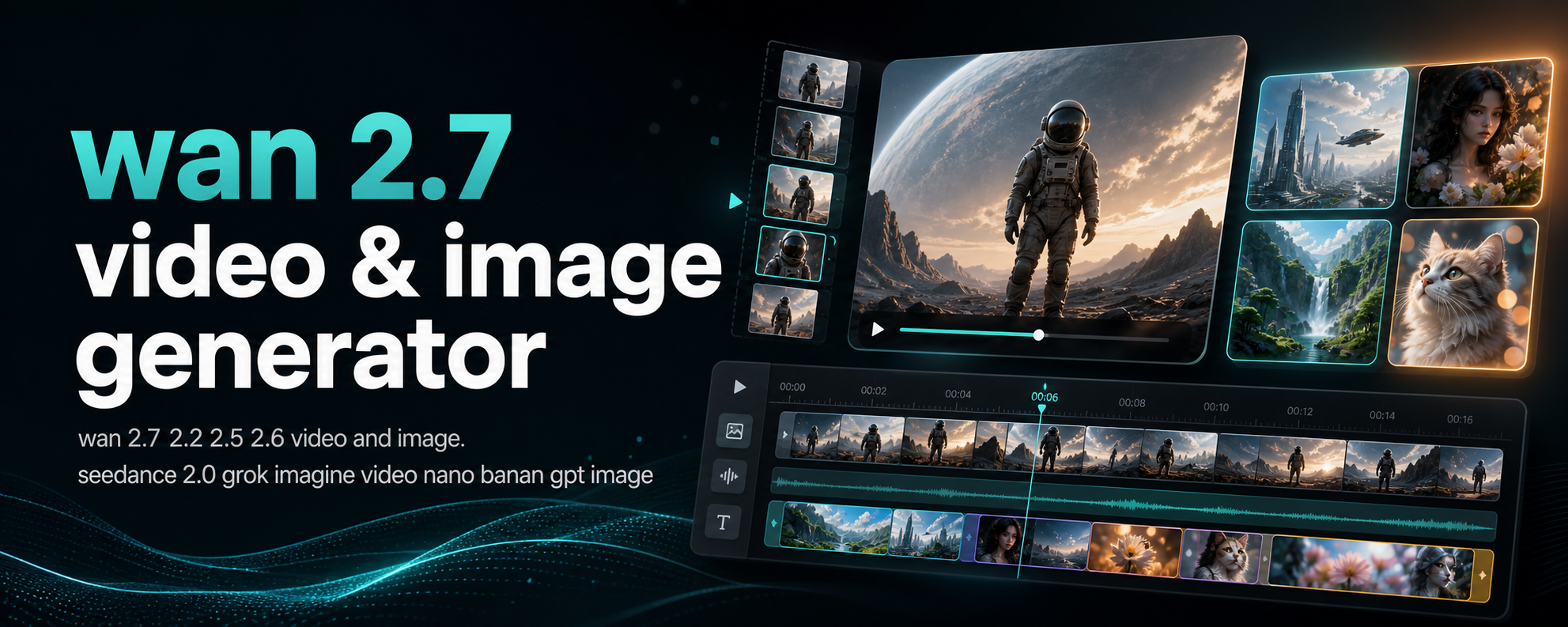
First and last frame control matters for one reason: it lets you choose where the shot lands.
That sounds simple, but it fixes one of the biggest problems in AI video. Standard image-to-video can keep the opening frame stable and still drift into a weak ending. Wan 2.7 gives you a second anchor, so the clip has somewhere specific to go.
That does not mean every frame pair will work. Good output still depends on how well your two images and your prompt agree.
This guide focuses on that practical layer.
What Users Actually Want From First and Last Frame
The search intent is not just "what is this feature?"
It is usually one of these:
- How do I stop the clip from drifting away from the intended ending?
- What makes two frames compatible enough to animate smoothly?
- What kind of prompt should I write when the start and end are already fixed?
- When should I use first/last frame instead of standard image-to-video or 9-grid?
Those are the questions that decide whether the feature feels useful or random.
What Wan 2.7 Uses From Your Two Frames
Wan 2.7 does not treat the frames as raw slides in a slideshow.
It reads them as two visual constraints:
- The first frame defines the opening state
- The last frame defines the destination state
- Your prompt tells the model how to travel between them
That last part is where many guides stay vague. The prompt is not optional here. Without it, the model still tries to bridge the two images, but it has to guess pacing, camera behavior, and motion logic.
The Best Frame Pairs Share One Thing: Continuity
Your two frames do not need to be nearly identical.
They do need to feel like two moments from the same shot.
Good continuity usually means:
- Similar lighting direction
- Similar lens feel or framing logic
- The same subject identity
- A believable spatial relationship between frame one and frame two
Bad continuity usually means:
- Noon lighting in frame one, sunset lighting in frame two, with no prompt explaining why
- A wide shot followed by an extreme close-up with no camera transition
- A subject teleporting to a new location inside the frame
- One frame looking like an editorial photo and the other like a game render
The Prompt Formula That Works Best
Use this structure:
Start state + end state + transition action + camera behavior + continuity note
Example:
The woman begins seated at the edge of the bed and ends standing by the window, the movement is calm and deliberate, the camera slowly pushes forward, morning light stays soft from camera left
Why this works:
Start statetells the model where motion beginsEnd statetells it what must be true by the last frameTransition actionfills in the middleCamera behaviorshapes the shot languageContinuity notekeeps style or lighting from wandering
Step-by-Step Workflow
1. Choose the shot goal first
Do not begin by asking whether two images look cool side by side.
Begin by deciding what the shot is meant to do:
- Reveal a product
- Move a subject across a scene
- Transition from one emotional beat to another
- Turn storyboard boards into a previsualized clip
The goal tells you what kind of end frame you need.
2. Build the frame pair around one clean change
The best pairs usually express one main idea:
- Empty desk -> finished desk setup
- Closed product -> open product
- Trailhead -> summit
- Calm face -> smiling face
When several things change at once, the model has more chances to invent the wrong bridge.
3. Match the visual logic
Keep these consistent whenever possible:
- Aspect ratio
- Subject scale
- Lighting direction
- Scene style
If you want one of those to change, make that change explicit in the prompt.
4. Write the motion between the two frames
Users often describe both frames and forget the transition itself.
That is the missing step.
Say things like:
the camera tracks slightly rightthe subject turns and walks forwardthe product rotates slowly toward camerathe shot rises from desk level to eye level
5. Generate, then fix one failure at a time
If the output is close but off, isolate the problem:
- Wrong pacing
- Wrong camera move
- Bad lighting continuity
- Too much subject morphing
Then revise only the part of the prompt or frame pair that controls that failure.
Good and Bad Frame Pair Examples
Good pair
Frame one: same character at a doorway
Frame two: same character at the center of the room
Prompt: the character walks forward into the room, camera follows with a soft handheld feel
Why it works:
- Same subject
- Same scene
- Clear path
- One main action
Weak pair
Frame one: product on a white tabletop
Frame two: same product floating over a neon city
Prompt: cinematic transition
Why it fails:
- Scene logic breaks
- Lighting breaks
- Camera language is too vague
- The model has to invent too much
Common Problems and How to Fix Them
The middle of the clip feels random
Cause:
Your prompt describes the endpoints but not the motion.
Fix:
Add one clear transition verb and one clear camera instruction.
The subject changes identity
Cause:
The two frames do not preserve enough shared facial or body information.
Fix:
Use more visually consistent frame pairs or switch to a reference-heavy workflow such as Wan 2.7 Reference-to-Video.
Lighting jumps halfway through
Cause:
The two frames imply different light sources.
Fix:
Rebuild one frame or add a prompt note that explains the lighting shift.
The clip feels like a cut, not a transition
Cause:
The spatial gap is too large.
Fix:
Choose a closer end frame or describe a camera move that logically bridges the gap.
When to Use First and Last Frame vs Other Wan 2.7 Modes
| Workflow | Best for |
|---|---|
| Standard image-to-video | One strong opening frame, loose ending |
| First and last frame | Controlled start and controlled landing |
| 9-grid image-to-video | Subject consistency across multiple visual references |
| Instruction-based editing | Fixing an existing clip instead of generating a new path |
If your main problem is "I know how the shot should end," first and last frame is usually the right tool.
If your main problem is "I need identity and angle consistency from many references," 9-grid is usually stronger.
FAQ
Does first and last frame work without a prompt?
Technically yes, but the results are less predictable. The prompt is what turns two still images into a directed transition.
Can the two frames use different styles?
They can, but the more style conflict you introduce, the more likely the transition looks unstable.
Should the two frames have the same aspect ratio?
Yes, whenever possible. It reduces unnecessary composition changes.
Is first and last frame better than 9-grid?
Not universally. It is better when you care about the beginning and the end of one shot. It is not automatically better for identity-heavy reference workflows.
What to Read Next
If your next problem is prompt writing, continue with Wan 2.7 Prompt Guide.
If your next problem is fixing a generated clip instead of planning one, use Wan 2.7 Instruction-Based Video Editing Guide.
If you want to test first and last frame now, use Wan 2.7 Image.