
Table of Contents

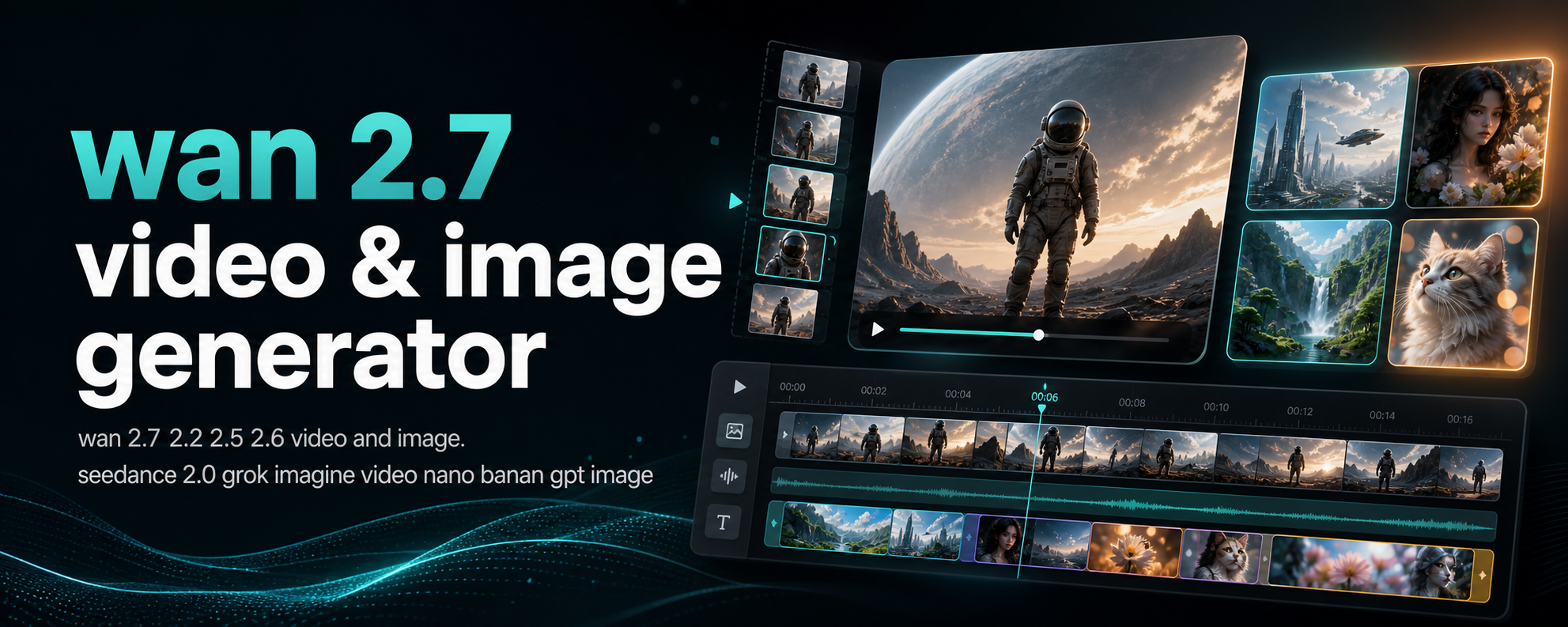
As of May 5, 2026, the cleanest rule is simple.
- Use Seedance 2.0 when you need to explore faster.
- Use Wan 2.7 when you need to direct tighter.
That is the real split behind this search.
Quick Comparison
| Decision point | Seedance 2.0 | Wan 2.7 |
|---|---|---|
| Best stage | Concept discovery | Directed execution |
| Main strength | Speed and variation | Control and revision leverage |
| Best for | Hook testing, UGC drafts, social clip volume | Storyboards, recurring characters, brand-sensitive shots |
| Audio story | Strong native audio lane | Not the main reason to choose it |
| Reference story | Multimodal exploration | First/last frame, 9-grid, R2V, and edit workflows |
| Risk it reduces | Waiting | Rework |
Most searchers are not really asking which model is "better."
They are asking which one fits the bottleneck in front of them.
Choose Seedance 2.0 When Speed Is the Bottleneck
On this site, the practical Seedance lane is Seedance 2.0 Fast.
That route makes sense when the job looks like this:
- test 8 hooks before lunch
- branch one concept into many ad angles
- try text, image, audio, and video references quickly
- get a rough answer before you start polishing
This is where Seedance earns its place:
- faster iteration loops
- strong multimodal input
- native audio support
- a better fit for discovery-stage work
Speed changes behavior. When the model answers fast, teams test more, kill weak ideas sooner, and stop over-investing in early drafts.
Choose Wan 2.7 When Rework Is the Bottleneck
Wan 2.7 becomes more useful when the problem is no longer "give me options."
The problem becomes:
- keep the character stable
- make shot B land naturally after shot A
- fix a nearly-good clip without starting over
- hold the composition closer to plan
That is why the Wan workflow stack matters:
- first-frame and last-frame control
- 9-grid reference workflows
- reference-to-video
- instruction-based editing
If you are paying more for rerolls than for waiting, Wan 2.7 is usually the better pick.
Decision Matrix by Job
| If your job is... | Pick first | Why |
|---|---|---|
| Testing many social hooks | Seedance 2.0 | Faster branching and better idea volume |
| Building a recurring character workflow | Wan 2.7 | Better control for consistency and revisions |
| Early pitch exploration | Seedance 2.0 | More creative spread earlier |
| Product demo with planned beats | Wan 2.7 | Cleaner shot intent and stronger control surfaces |
| Storyboard-led ad production | Wan 2.7 | Less reroll waste once direction is locked |
| Finding the winning concept, then finishing it | Both | Explore with Seedance, execute with Wan |
My Practical Recommendation
Use this rule for the fastest decision:
- Start with Seedance 2.0 when the brief is still fluid.
- Move to Wan 2.7 when the shot is already defined.
That split is more useful than a generic scorecard.
Seedance helps you discover direction.
Wan helps you protect direction.
The Best Hybrid Workflow for Many Teams
For a lot of teams, the strongest answer is not either-or.
It is stage separation:
- use Seedance 2.0 to test hooks, tones, and rough visual territory
- pick the winning direction
- use Wan 2.7 to tighten continuity, references, and edit passes
That workflow usually wastes less time than forcing one model to do both jobs equally well.
FAQ
Which model is better for short-form ads?
If you are testing many variants, Seedance 2.0 is usually better first. If the ad depends on controlled transitions, reference consistency, or a precise finish, move to Wan 2.7 after the concept is chosen.
Which model is better for recurring characters?
Wan 2.7 is the stronger fit when recurring character consistency is a core requirement. That is exactly where first/last frame, 9-grid, and reference-driven workflows matter more than raw speed.
Should teams pick one model or use both?
If your budget and workflow allow it, using both is often smarter. Seedance is the exploration lane. Wan is the execution lane.
Is Seedance 2.0 Fast enough for final delivery?
Sometimes yes, especially for fast-moving social content and concept reviews. But if the clip is brand-sensitive or needs tighter revision control, Wan 2.7 is usually the safer finishing lane.
Bottom Line
If you need more attempts per hour, start with Seedance 2.0 Fast.
If you need more control per usable shot, start with Wan 2.7 and continue with the Wan 2.7 Prompt Guide, 9-grid guide, or video editing guide.